
Bathroom remodeling costs can vary significantly even when two bathrooms are the same size. A straightforward finish update is very different from a project that relocates plumbing, builds a new shower, changes walls, upgrades electrical work and replaces every finish.
What Drives the Cost of a Bathroom Remodel?
Important factors include demolition, bathroom size, layout changes, shower or tub construction, waterproofing, tile quantity and pattern, vanity and countertop selections, plumbing fixtures, lighting, ventilation, electrical work and the condition of the existing walls and subfloor.
Shower and Tub Construction
A new shower is more than tile. The assembly behind the finished surface matters. The project may involve demolition, drain work, waterproofing, wall preparation, shower pan construction, niches, benches, glass and finish tile. Larger-format tile, detailed patterns and specialty materials can also change installation requirements.
Moving Plumbing Fixtures
Keeping a toilet, shower and vanity in their existing locations can reduce the amount of plumbing and reconstruction. Moving fixtures may improve the layout, but the feasibility and cost depend on the existing structure, drain locations and access to plumbing.
Vanity, Storage and Countertops
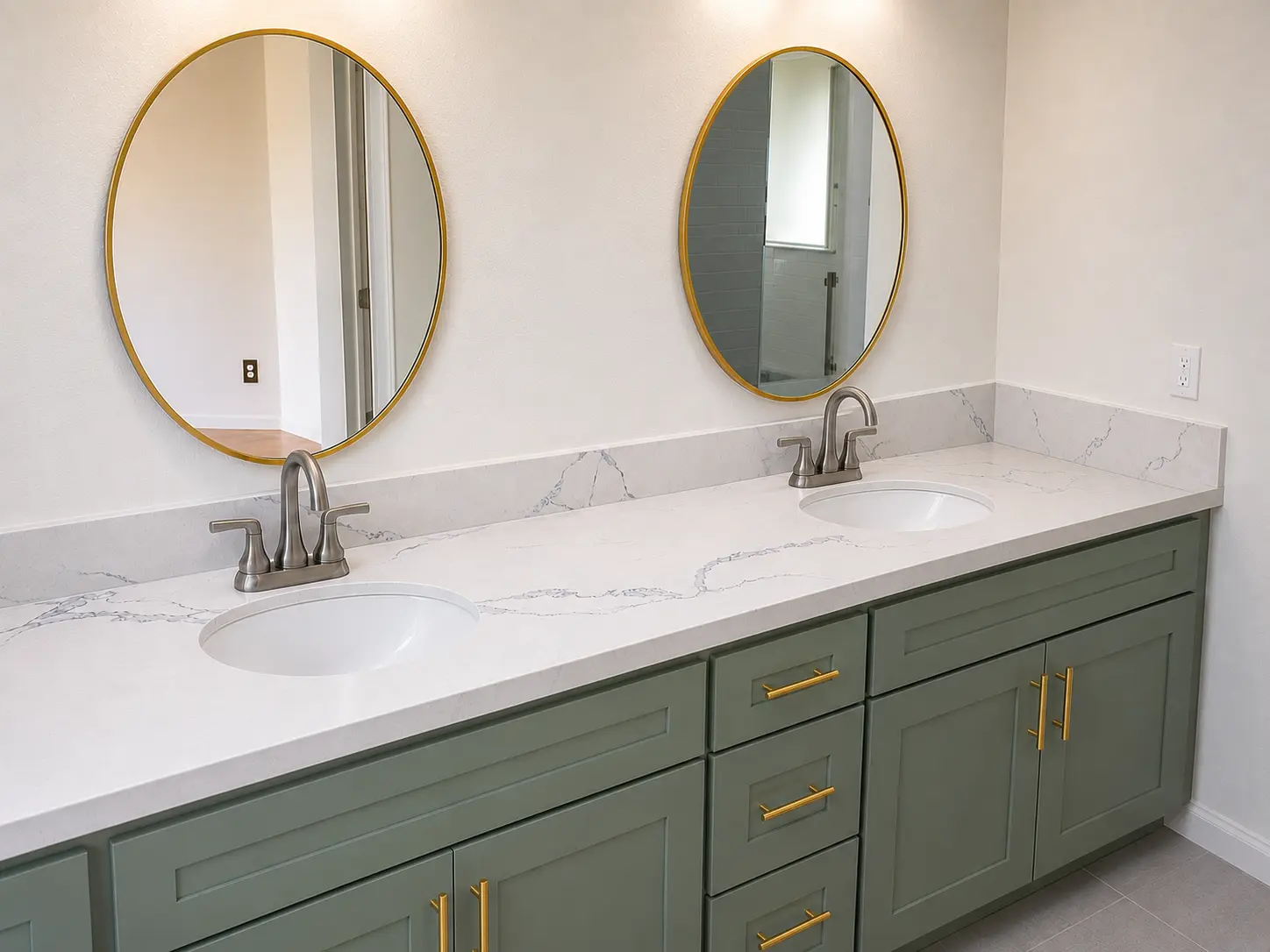
Vanities range from simple manufactured units to custom cabinetry designed around the room. Storage needs, sink configuration, countertop material, medicine cabinets and electrical outlets should be coordinated before installation so the finished bathroom works as a complete space.
Lighting, Receptacles and Ventilation
Bathroom lighting often combines general lighting, vanity lighting and sometimes shower-rated fixtures. Electrical receptacles and switches need to be planned around the vanity, mirrors and other finishes. Ventilation should also be evaluated as part of the remodel rather than treated as an afterthought.
Tile and Finish Choices
Tile price is only part of the equation. Layout, pattern, size, substrate preparation, niches, transitions and the number of tiled surfaces all affect installation. A carefully planned tile layout can also make a bathroom look more intentional without necessarily using the most expensive material.
Permits and Inspections
Permit requirements vary by city and project scope. Changes involving plumbing, electrical, structural work or mechanical ventilation may require permits and inspections. Requirements should be confirmed for the actual property before work begins.
How to Plan a Bathroom Budget
Define the construction scope first. Decide whether you are keeping or changing the layout, whether the tub or shower configuration changes, and what work is required behind the finishes. Then establish realistic allowances for tile, vanity, countertop, plumbing fixtures, glass, lighting and accessories.
Questions to Ask Before Hiring a Bathroom Remodeling Contractor
- Is demolition and debris removal included?
- How will the shower or wet area be waterproofed?
- Are plumbing and electrical changes included in the scope?
- Who handles permits when required?
- Which materials do I purchase and which are contractor supplied?
- When do tile, vanity, fixtures and glass need to be selected?
- How are changes handled after work begins?
Focus on What Is Behind the Finished Bathroom
A bathroom can look beautiful on the day it is completed, but the construction behind the tile and fixtures is equally important. Planning waterproofing, plumbing, electrical work, ventilation and substrate preparation before finishes are installed helps create a bathroom designed for long-term use.
Southline Construction provides bathroom remodeling throughout Los Angeles County, Orange County and the South Bay. We can help review the scope of your bathroom project and identify the construction decisions that should be made before demolition begins.
Frequently Asked Questions
What affects the cost of a bathroom remodel the most?
Layout changes, plumbing work, electrical work, tile coverage, waterproofing, vanity and countertop selections, shower glass, fixtures, ventilation and existing conditions can all have a major effect on the final project cost.
Is it less complicated to keep the existing bathroom layout?
Keeping plumbing fixtures in similar locations can simplify portions of the work. Moving a toilet, shower, tub or vanity may require additional plumbing, framing, waterproofing and finish work depending on the existing conditions.
Why is waterproofing important in a bathroom remodel?
Wet areas need a properly planned substrate and waterproofing system before tile and finish materials are installed. The finished tile is only one part of the assembly, so the work behind it is an important part of the project.
Do bathroom remodels require permits?
Requirements vary by jurisdiction and project scope. Plumbing, electrical, mechanical or structural changes may require permits or inspections. The specific property and proposed work should be reviewed before construction begins.
What should I select before bathroom construction starts?
It helps to select major items such as tile, plumbing fixtures, vanity, countertop, lighting, mirrors, shower glass and accessories early enough to confirm dimensions and installation requirements.