
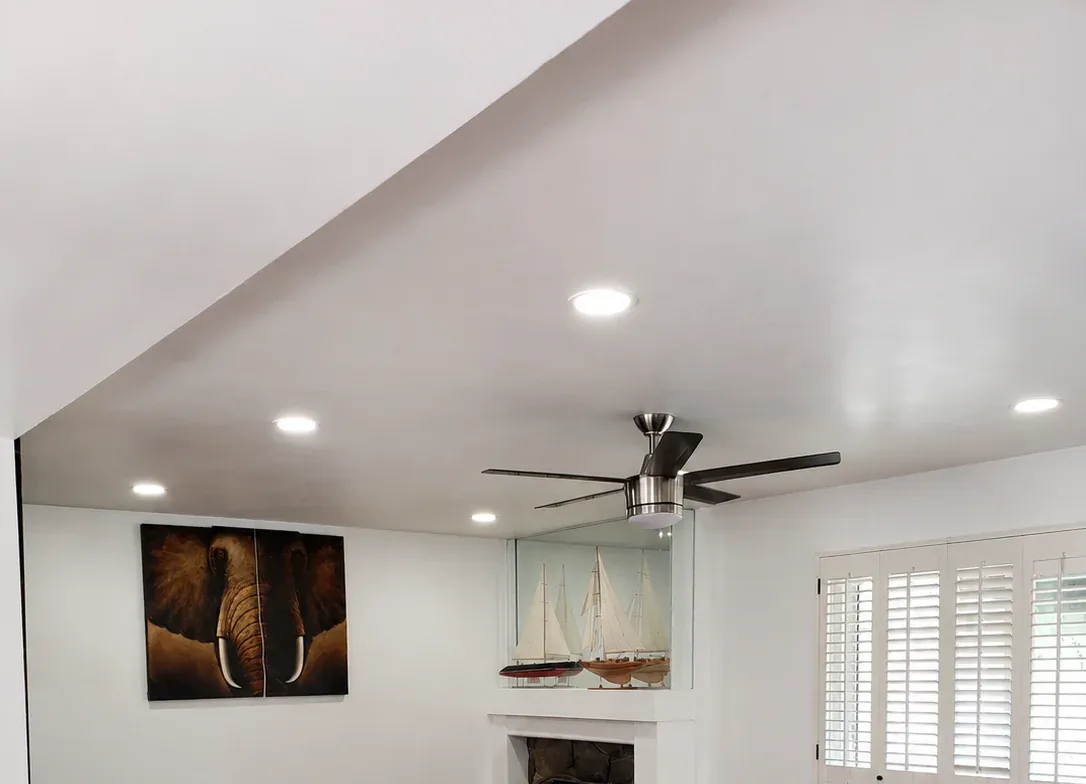
Recessed lighting can make a room brighter and cleaner-looking, but the best result comes from planning the lighting before openings are cut into the ceiling. Fixture count alone does not determine whether a room will feel well lit. Placement, beam spread, ceiling height, room use, existing lighting and controls all matter.
Start With What the Room Needs
A kitchen needs different lighting than a hallway or living room. Kitchens often need useful light over work surfaces, while living areas may benefit from more flexible ambient lighting. Think about furniture, cabinets, counters, artwork and circulation instead of laying out lights only by dividing the ceiling into equal squares.
How Many Recessed Lights Do You Need?
There is no universal number that works for every room. Room dimensions, ceiling height, fixture output, beam angle, wall colors and other light sources all affect the result. A good layout should avoid both dark areas and an unnecessarily crowded ceiling.
New Construction vs. Existing Ceilings
Installation is generally easier when framing and wiring are accessible during a remodel. In a finished ceiling, existing joists, ducts, plumbing, insulation and other concealed conditions can affect where fixtures can be installed and how wiring can be routed.
Fixture Size and Appearance
Modern recessed fixtures are available in different sizes, trims and low-profile configurations. The right choice depends on the ceiling, desired appearance and lighting needs. Consistency matters: mixing color temperatures or noticeably different fixture styles in the same visual area can make a finished room feel uncoordinated.
Color Temperature and Dimming
Warm light can create a comfortable residential feel, while cooler light can appear brighter or more task-oriented. Many homeowners prefer dimming so the same room can provide brighter task lighting and softer evening lighting. Fixture and dimmer compatibility should be considered together.
Switch Locations and Lighting Zones
One switch for every light is not always the best plan. In larger kitchens and open rooms, separate zones can provide better control. For example, general recessed lighting may be controlled separately from pendants, under-cabinet lighting or decorative fixtures.
Electrical and Permit Considerations
New lighting can require new wiring, switching or circuit work. Permit requirements depend on the jurisdiction and project scope. When recessed lighting is part of a larger remodel, electrical planning should be coordinated before drywall repair and painting.
Before Installation, Decide These Things
- Which areas need task lighting and which need general light?
- Where will cabinets, furniture and major fixtures be located?
- Do you want dimming?
- What color temperature do you prefer?
- Should lights be divided into multiple control zones?
- Are there attic, joist, duct or insulation conditions that affect placement?
Southline Construction provides recessed lighting and electrical installation services throughout Los Angeles County, Orange County and the South Bay. Planning the layout before installation helps the finished lighting look intentional and work better for the room.
Frequently Asked Questions
How many recessed lights should I install in a room?
There is no single correct number for every room. The layout should consider room size, ceiling height, task areas, cabinets, furniture, decorative fixtures and how much light the space needs.
Should recessed lights be placed in a perfect grid?
Not always. A grid can work in some rooms, but lighting should also respond to the actual layout of the space. Task areas, walkways, cabinets, artwork and other fixtures can affect the best placement.
Can recessed lights be put on dimmers?
Many recessed lighting systems can be dimmed when compatible fixtures, lamps, drivers and controls are used. Compatibility should be confirmed before installation so the lights operate as intended.
Can existing ceiling conditions affect recessed-light placement?
Yes. Joists, ducts, plumbing, insulation and other concealed conditions can limit where fixtures or wiring can be installed. The ceiling conditions should be considered before finalizing the layout.
Do new recessed lights require permits?
Requirements depend on the jurisdiction and the scope of the electrical work. New wiring, circuits or larger remodeling projects may involve permits or inspections, so the requirements should be confirmed for the specific project.